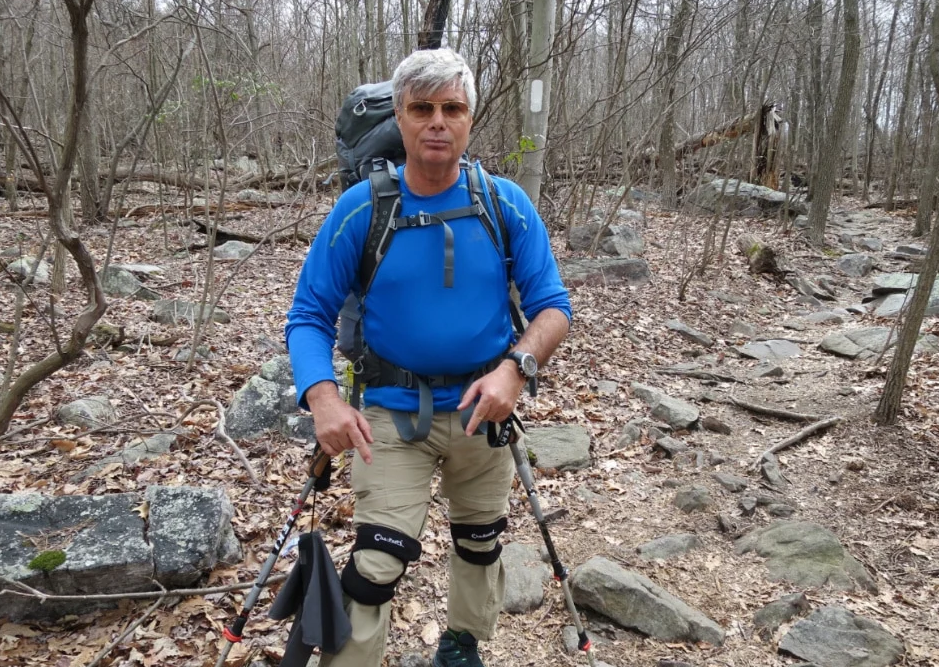
Lightweight Support Gear to Help Keep You on the Trail
Hiking places repeated stress on the knees, ankles, feet, and leg muscles. Long descents, uneven terrain, heavy backpacks, and increased mileage can sometimes lead to discomfort or overuse injuries.
The right hiking support gear can provide additional stability, compression, and comfort while helping hikers stay active during recovery or prevent common trail-related problems.
Products such as knee braces, ankle stabilizers, compression sleeves, and support straps are designed for different needs, including:
- Knee discomfort
- Ankle instability
- Plantar fasciitis
- Achilles tendon irritation
- Iliotibial band (ITB) discomfort
- Muscle strains
Lightweight hiking supports are designed to maintain mobility while providing targeted compression. They are different from large medical braces typically used after major injuries or surgery.
The best support option depends on the type of discomfort, activity level, and personal fit.
Best Hiking Knee Braces, Supports & Compression Gear of 2026
| Product | Best For |
|---|---|
| Pro-Tec Plantar Fasciitis Foot Sleeve | Plantar fasciitis, foot support |
| Pro-Tec Iliotibial Band Wrap | IT band discomfort |
| Pro-Tec Patellar Tendon Strap | Patellar tendon support |
| Pro-Tec Athletics X-Trac Knee Support | Runner’s knee, knee stability |
| Pro-Tec Gel Force Knee Sleeve | Knee joint support |
| Mueller Adjustable Knee Support | Adjustable knee compression |
| Zensah Thigh Compression Sleeve | Muscle strains |
| Med Spec ASO Ankle Stabilizer | Ankle support |
| CEP Compression Socks | Lower leg compression |
| Kinesiology Taping | Custom support |
1. Pro-Tec Plantar Fasciitis Foot Sleeve
The Pro-Tec Plantar Fasciitis Foot Sleeve provides targeted compression around the foot and arch area to help improve comfort during hiking activities.
Its lightweight design allows it to be worn under regular hiking socks without adding significant bulk. The sleeve is especially useful for hikers experiencing plantar fascia discomfort or Achilles tendon irritation.
For best results, it works well when combined with proper stretching routines and supportive footwear.
Best for: Plantar fasciitis and foot support.
Highlights:
- Lightweight compression design
- Fits under hiking socks
- Provides arch support
- Suitable for active use
2. Pro-Tec Iliotibial Band Wrap
The Pro-Tec Iliotibial Band Wrap is designed to provide focused compression around the IT band area above the knee.
The iliotibial band runs along the outside of the leg and can become irritated from repetitive movement, especially during long hikes or downhill walking.
The simple neoprene strap design helps provide targeted support while allowing normal movement on the trail.
Best for: IT band discomfort and outside knee support.
Highlights:
- Targeted compression
- Lightweight neoprene construction
- Easy adjustment
- Minimal movement restriction
3. Pro-Tec Patellar Tendon Strap
The Pro-Tec Patellar Tendon Strap is designed to provide support below the kneecap by applying gentle compression to the patellar tendon area.
It can help improve comfort for hikers experiencing mild knee discomfort related to overuse, including patellar tendon irritation and runner’s knee symptoms.
Its compact design makes it easy to wear during hiking without limiting movement.
Best for: Patellar tendon support and mild knee discomfort.
Highlights:
- Compact design
- Easy to wear while hiking
- Provides targeted compression
- Maintains mobility
4. Pro-Tec Athletics X-Trac Knee Support
The Pro-Tec Athletics X-Trac Knee Support provides compression above and below the kneecap while maintaining a flexible range of motion.
The design helps stabilize the kneecap area and provides additional support during activities involving repeated bending, climbing, and descending.
It is suitable for hikers who need more support than a simple strap but want to avoid bulky braces.
Best for: Runner’s knee, jumper’s knee, and general knee stability.
Highlights:
- Support above and below kneecap
- Flexible movement
- Lightweight construction
- Helps improve knee stability
5. Pro-Tec Gel Force Knee Sleeve
The Pro-Tec Gel Force Knee Sleeve provides more complete knee support through compression and reinforced structure.
A gel pad around the kneecap area helps improve stability, while additional stitching provides support on both sides of the knee.
The sleeve is designed for active use, making it suitable for hiking, walking, and other outdoor activities.
Best for: Knee joint support and patellar tracking issues.
Highlights:
- Gel kneecap support
- Full knee compression
- Active-use design
- Comfortable during movement
6. Mueller Adjustable Knee Support
The Mueller Adjustable Knee Support provides customizable compression through adjustable straps.
Its open-patella design helps keep the kneecap positioned correctly while improving airflow compared with full-coverage sleeves.
The adjustable fit makes it suitable for hikers who want different compression levels depending on activity and comfort needs.
Best for: Adjustable knee support and compression.
Highlights:
- Adjustable straps
- Open patella design
- Breathable construction
- Fits either knee
7. Zensah Thigh Compression Sleeve
The Zensah Thigh Compression Sleeve is designed to support strained hamstring, quadriceps, and groin muscles while maintaining freedom of movement.
Made with moisture-wicking fabric, the sleeve provides compression without feeling restrictive during outdoor activities.
Grip technology on the inside helps prevent slipping, keeping the sleeve securely positioned during hiking.
Best for: Muscle strains and thigh support.
Highlights:
- Moisture-wicking fabric
- Comfortable compression
- Stay-in-place design
- Maintains mobility
8. Med Spec ASO Ankle Stabilizer
The Med Spec ASO Ankle Stabilizer is a popular choice for hikers who need additional ankle support after sprains or for preventing ankle rolls.
Its stabilizing straps create a figure-eight support system that helps improve ankle stability while maintaining flexibility.
The low-profile design allows it to fit inside many hiking shoes and boots.
Best for: Ankle stability and injury prevention.
Highlights:
- Figure-eight support straps
- Fits inside hiking footwear
- Adjustable lacing system
- Good balance of support and flexibility
9. CEP Compression Socks
CEP Compression Socks provide graduated compression designed to support circulation and reduce swelling during hiking activities.
The compression is strongest around the ankle and gradually decreases higher up the leg, helping provide consistent lower-leg support.
They are commonly used by hikers dealing with lower-leg fatigue, Achilles tendon discomfort, or foot swelling during long days outdoors.
Best for: Lower-leg compression and hiking comfort.
Highlights:
- Graduated compression
- Reduces lower-leg fatigue
- Moisture management
- Suitable for long-distance hiking
10. Kinesiology Taping
Kinesiology taping is a flexible support method that can be customized for different areas of discomfort.
Unlike pre-made braces, tape can be applied in various patterns depending on the individual’s needs. Many hikers learn taping techniques through physical therapists, athletic trainers, or educational resources.
It can be used for temporary support, movement awareness, and recovery routines.
Best for: Customized support solutions.
Highlights:
- Highly adjustable
- Lightweight
- Allows full movement
- Multiple application methods
How to Choose Hiking Knee Braces and Supports
1. Identify the Type of Support Needed
Different products target different areas:
- Knee sleeves → General knee compression and stability
- Tendon straps → Targeted tendon support
- Ankle braces → Stability after sprains or weak ankles
- Compression sleeves → Muscle support and circulation
- Foot sleeves → Arch and heel support
Choosing the correct type is more important than simply selecting the strongest brace.
2. Consider Comfort and Mobility
Hiking requires continuous movement, so support gear should provide stability without limiting natural motion.
A good hiking brace should:
- Stay in place
- Fit comfortably under clothing
- Allow normal walking movement
- Avoid excessive pressure
3. Pay Attention to Compression Level
Compression should feel supportive but not restrictive.
Too little compression may not provide enough support, while excessive compression can become uncomfortable during long hikes.
Adjustable straps and sleeves with flexible materials allow better customization.
4. Match Support With Your Activity
Different hiking styles require different levels of support.
For short day hikes, lightweight sleeves and straps may be enough.
For longer backpacking trips with heavy packs, hikers may prefer stronger ankle or knee stabilization.
Frequently Asked Questions
What is Runner’s Knee?
Runner’s knee refers to pain around the front or sides of the kneecap. It can result from overuse, muscle imbalance, improper movement patterns, or repeated stress on the knee joint.
Support straps, strengthening exercises, and proper conditioning can help manage symptoms.
What is Jumper’s Knee (Patellar Tendonitis)?
Jumper’s knee is irritation of the patellar tendon connecting the kneecap to the shin bone.
It is commonly caused by repeated stress from jumping, running, or high-impact activities.
Patellar tendon straps can provide additional support around this area.
What is Iliotibial Band Syndrome (ITB)?
IT band syndrome occurs when the iliotibial band along the outside of the leg becomes irritated.
Common symptoms include pain on the outside of the knee, especially during downhill hiking or repetitive movement.
IT band wraps may provide temporary support, while stretching and strengthening exercises can help address underlying causes.
What is Plantar Fasciitis?
Plantar fasciitis is a common cause of heel and foot discomfort caused by irritation of the tissue along the bottom of the foot.
Supportive footwear, stretching, and foot sleeves can help improve comfort during activity.
What is Achilles Tendinitis?
Achilles tendinitis affects the tendon connecting the calf muscles to the heel.
It often develops from increased activity levels, repetitive stress, or insufficient recovery.
Compression socks, stretching, and proper training adjustments may help support recovery.
Final Thoughts
The right hiking support gear can make outdoor adventures more comfortable by providing additional stability and targeted compression.
Lightweight options such as foot sleeves, knee straps, compression socks, and ankle stabilizers are popular among hikers because they provide support without significantly restricting movement.
The best choice depends on the type of discomfort, hiking conditions, and personal comfort preferences.
For long-term hiking performance, support products work best alongside proper training, strength exercises, suitable footwear, and gradual increases in activity.