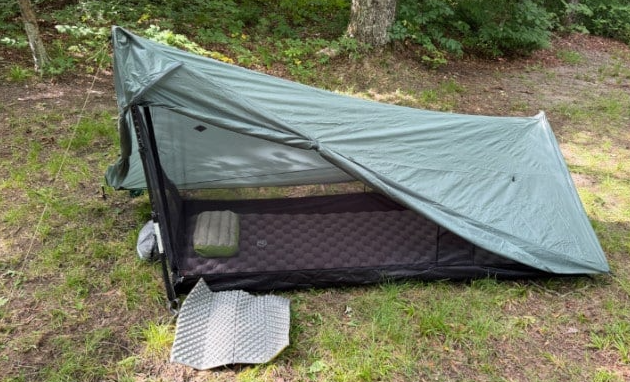
A Lightweight Single-Wall Trekking Pole Tent With a Compact Footprint
The Tarptent ProTrek is a one-person ultralight shelter designed for backpackers who want a lightweight tent that performs well in tight campsites and variable outdoor conditions.
Weighing only 23.5 ounces (667 grams), the ProTrek uses two trekking poles for setup and features a single-wall design with a floating bathtub floor. Its narrow footprint makes it especially suitable for dispersed camping in areas where space is limited, such as dense forests or uneven terrain.
Unlike many minimalist tarp-style shelters, the ProTrek combines the simplicity of a tarp setup with the convenience of a fully enclosed tent. The attached inner floor and fly can be pitched together, allowing faster setup while keeping the sleeping area protected from rain.
With front and side entrances, excellent ventilation options, and a $249 price point, the ProTrek offers a strong balance of weight, functionality, and affordability in the ultralight tent category.
Tarptent ProTrek Specifications
| Feature | Details |
|---|---|
| Weight | 23.5 oz / 667 g |
| Capacity | 1 Person |
| Structure | Single-wall trekking pole tent |
| Poles Required | 2 Trekking Poles |
| Minimum Stakes | 4 |
| Peak Height | Front: 46-48 in / Rear: 26-28 in |
| Floor Dimensions | 84 x 28 in |
| Front Width | 56 in |
| Length | 108 in tapering to 40 in |
| Vestibules | Front and side, 20 in |
| Fly Material | 20D Silicone Polyester (3000mm) |
| Floor Material | 30D Silicone-coated Nylon 66 (5000mm) |
| Doors | Front + Side |
| Seam Sealing | Required |
| Price | $249 |
Lightweight Design and Minimal Footprint
The biggest advantage of the Tarptent ProTrek is its combination of low weight and compact setup area.
At only 23.5 ounces, it is competitive with many premium ultralight shelters while remaining significantly more affordable than Dyneema-based tents.
The narrow footprint makes it ideal for:
- Dense forests
- Small campsites
- Uneven terrain
- Limited-space backcountry locations
Many ultralight tents require large open areas for proper setup, but the ProTrek’s compact design allows backpackers to camp in places where larger shelters may not fit.
Key Features
Front and Side Door Access
One of the main improvements of the ProTrek design is its dual-entry system.
The tent includes:
- A front zippered door
- A side zippered door
This provides several advantages:
- Easier entry and exit
- Better ventilation options
- More convenient gear storage
The side entrance is especially useful because it allows backpackers to store equipment under cover without blocking the main entrance.
Compared with traditional front-entry shelters, the offset trekking pole design helps create a more open living area.
Trekking Pole Setup
The Tarptent ProTrek requires two trekking poles for pitching.
The pole requirements are:
- Front pole: 46-48 inches
- Rear pole: 26-28 inches
The pole tips fit into reinforced peak points, while the handles sit inside fabric cups sewn into the tent floor.
These pole cups help keep the structure aligned and make setup more consistent.
The tent also includes external panel guy-out points that can increase interior space by pulling the side walls outward.
Setup Considerations
Although the ProTrek is lightweight and practical, it does require some practice to achieve the best pitch.
The asymmetrical fly design creates a trapezoidal shape, which means setup is slightly less intuitive compared with symmetrical trekking pole tents.
New users should practice before taking it on a backcountry trip.
Important setup considerations include:
- Correct trekking pole length
- Proper stake placement
- Ground conditions
- Tension adjustments
A properly pitched ProTrek provides a much tighter and more weather-resistant shelter.
Ventilation and Condensation Management
Ventilation is one of the strongest features of the ProTrek.
The tent provides multiple airflow options:
- Front door opening
- Side door opening
- Rear ventilation area
- Adjustable fly coverage
In warmer conditions, users can expose more mesh areas to improve airflow.
The floating floor design also helps manage condensation. Moisture that forms on the interior walls can drain through the mesh connection between the floor and fly.
This design helps keep sleeping areas more comfortable during humid conditions.
Floating Floor Design
The ProTrek uses a floating bathtub floor system.
The floor:
- Measures 84 inches long
- Provides approximately 5 inches of bathtub-style protection
- Fits a standard 25-inch sleeping pad
The floating design allows the floor to adapt to uneven terrain without affecting the tension of the outer fly.
Additional benefits include:
- Better moisture protection
- More flexible campsite selection
- Improved interior comfort
The rectangular floor shape also provides enough room for sleeping equipment and small personal items.
Materials and Durability
The Tarptent ProTrek uses lightweight silicone-coated fabrics designed for a balance of weight savings and durability.
Fly Fabric
The outer fly uses:
20D Silicone Polyester
Specifications:
- 3000mm waterproof rating
- Low stretch when wet
- Lightweight construction
Silicone polyester is often preferred for ultralight shelters because it absorbs less water and maintains better tension compared with some traditional materials.
Floor Fabric
The bathtub floor uses:
30D Silicone-coated Nylon 66
Specifications:
- 5000mm waterproof rating
- Strong tear resistance
- Durable construction
Nylon 66 is known for providing strong performance relative to its weight.
Seam Sealing Requirement
Like many silicone-coated ultralight tents, the ProTrek requires seam sealing before use.
This additional step improves waterproof performance.
Tarptent offers professional seam sealing as an option, which can be convenient for users who prefer a ready-to-use shelter.
Tarptent ProTrek vs Similar Ultralight Tents
| Tent | Weight | Price |
|---|---|---|
| Tarptent ProTrek | 23.5 oz / 667g | $249 |
| Six Moon Designs Lunar Solo | 26 oz / 740g | $260 |
| Durston X-Mid 1 | 25.7 oz / 729g | $269 |
| 3F UL Lanshan Pro 1 | 24.2 oz / 686g | $200 |
| Six Moon Designs Skyscape Trekker | 28 oz / 790g | $275 |
| Tarptent Rainbow | 36.6 oz / 1035g | $269 |
The ProTrek stands out because it combines:
- Very low weight
- Dual-door access
- Compact footprint
- Affordable price
Compared with premium Dyneema shelters, it provides similar ultralight advantages at a much lower cost.
Pros and Cons
Pros
✅ Extremely lightweight at 23.5 oz
✅ Compact footprint for small campsites
✅ Front and side entrances
✅ Excellent ventilation options
✅ Affordable compared with premium ultralight tents
✅ Durable silicone-coated fabrics
✅ Floating floor improves adaptability
Cons
❌ Requires trekking poles for setup
❌ Setup requires practice
❌ Seam sealing required
❌ Lightweight fabrics need careful handling
❌ Small zipper intersection may require adjustment
Who Is the Tarptent ProTrek Best For?
The Tarptent ProTrek is a great choice for:
- Solo backpackers
- Ultralight hikers
- Thru-hikers
- Forest campers
- Backpackers seeking an affordable shelter
It is especially useful for hikers who regularly camp in locations where larger tents are difficult to pitch.
Those who prefer instant setup, freestanding designs, or maximum interior space may prefer traditional tent styles.
Final Verdict
The Tarptent ProTrek is an excellent ultralight solo tent that delivers impressive performance at a reasonable price.
Its 23.5-ounce weight, compact footprint, dual-door design, and strong ventilation make it a practical shelter for minimalist backpackers.
While it requires some setup practice and careful handling due to its lightweight materials, the overall design provides a strong combination of portability, weather protection, and usability.
For backpackers looking for a lightweight single-person shelter without paying premium Dyneema prices, the Tarptent ProTrek is one of the most compelling options available.